The Isle of Man is famous for its dramatic coastline, mountain roads and historic towns, but some of its most memorable places are the ones that take a little more effort to find. In late summer, hidden coves, waterfall pools and quiet stretches of shore become especially appealing for walkers, photographers and confident outdoor swimmers looking for a slower side of island life.
This is also a timely subject in 2026. Visit Isle of Man has recently highlighted both secret beaches and wild swimming spots, drawing attention to places beyond the better-known promenades and visitor attractions. For anyone planning an outdoor day, our Places section can help you build a route, while Lifestyle is useful for more ideas around walking, wellness and local living.
The key is to treat these locations as natural places rather than managed attractions. Access can involve uneven paths, steep banks, slippery rocks or tidal windows, and conditions can change quickly. That sense of wildness is part of the appeal, but it also means planning matters.
Secret Beaches Worth Seeking Out Around the Island
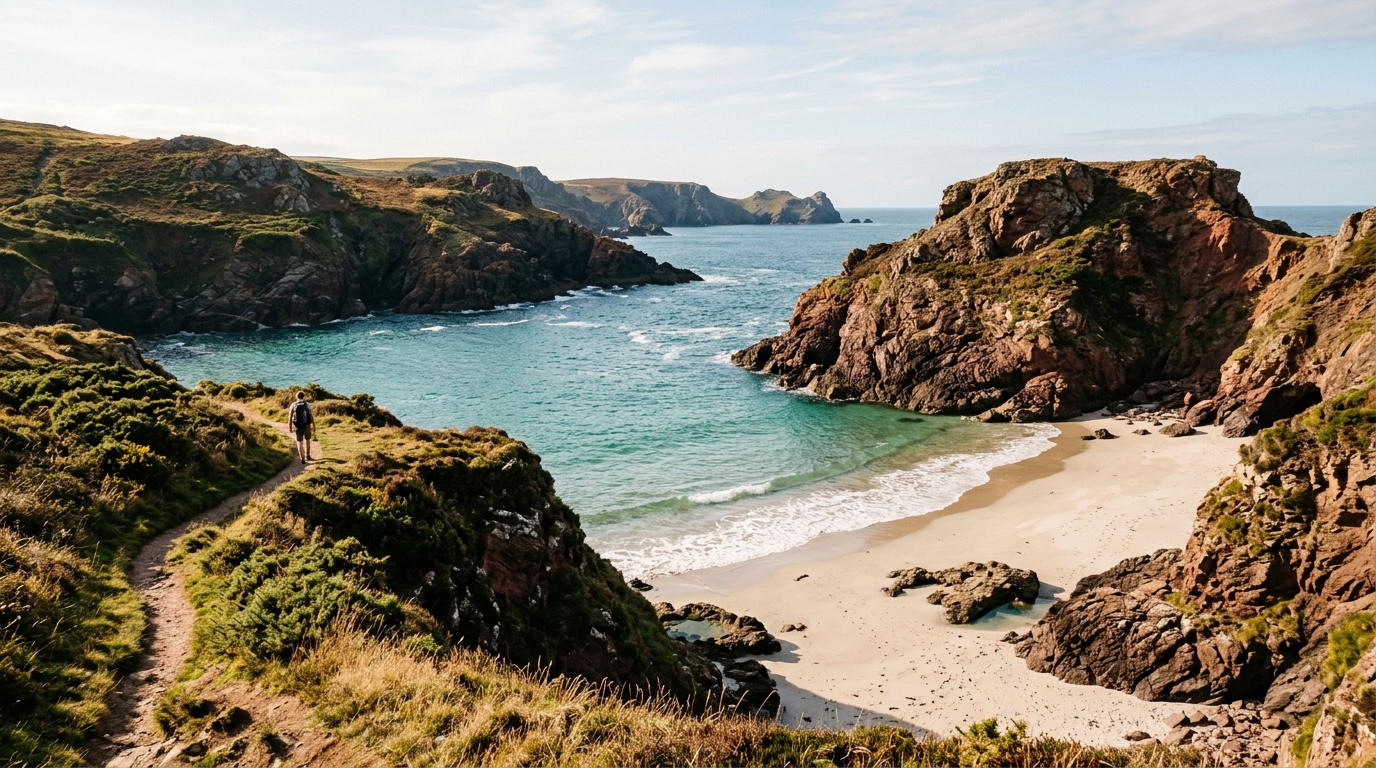
There are well-known beaches on the Isle of Man that are easy to reach, but the island also has smaller coves and lesser-known stretches of coastline where the journey is part of the experience. Several of the most interesting locations sit close to sections of the Raad ny Foillan coastal footpath, so a beach visit can often be combined with a scenic walk.
West-Coast Coves and Hidden Shorelines
White Beach Cove: Quartz Stones, Waterfall and Wild Scenery
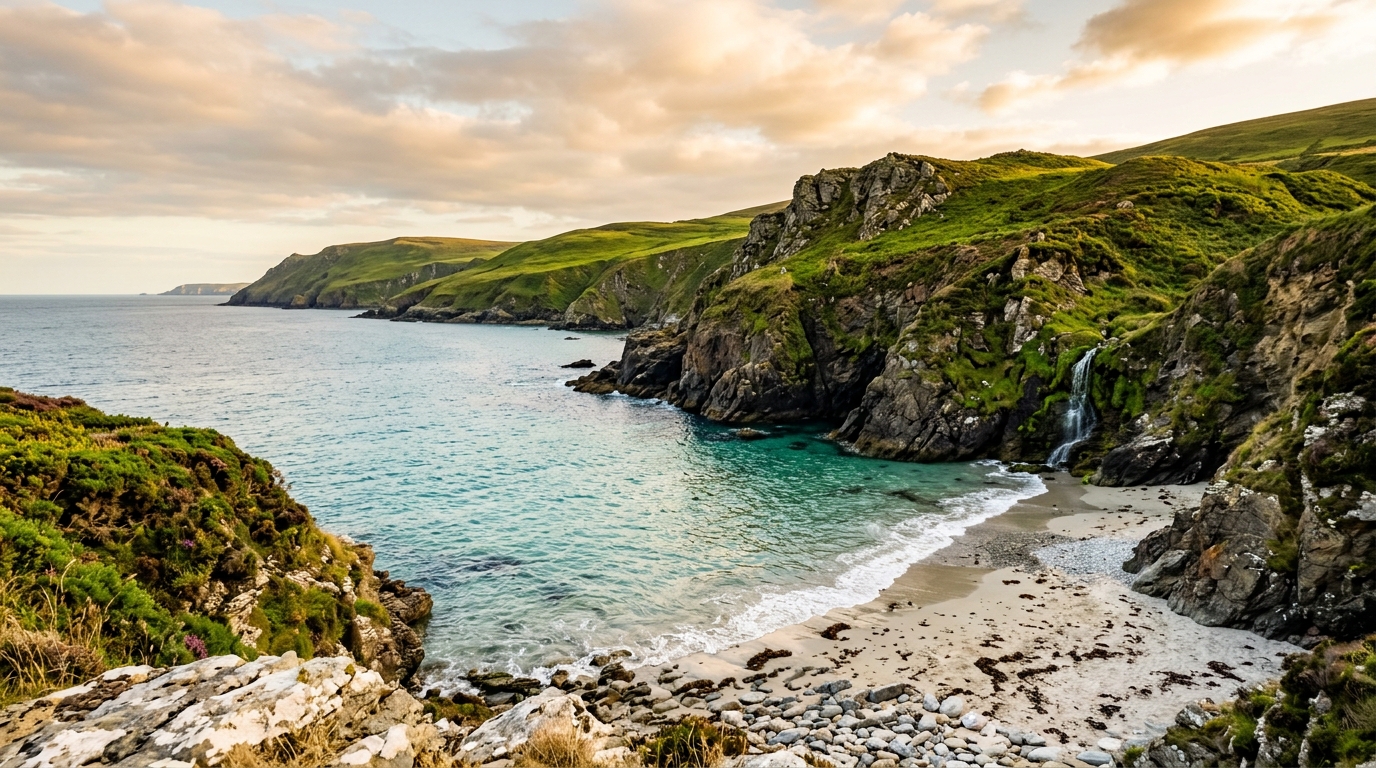
White Beach Cove, also known as Traie Vane, is one of the most distinctive hidden beaches on the west side of the Isle of Man. Visit Isle of Man describes it as a remote cove with turquoise water, white quartz stones and a waterfall, giving it a very different character from the island’s broader sandy beaches.
The recommended approach starts near Niarbyl, following the Raad ny Foillan coastal path south for roughly 20 minutes before descending toward the cove. That short walk is exactly what makes the location feel removed from the busier road network. The beach works well for photography, a quiet stop during a coastal walk, or simply sitting near the water when conditions are calm.
Do not assume the waterfall or rocks are automatically safe to climb. Wet stone can be extremely slippery, and the route to higher pools involves scrambling. For most visitors, the best experience is the cove itself: enjoy the landscape, keep your distance from exposed edges, and leave enough time to walk back in good light.
Lady Port and White Strand: Two Very Different Hidden Beaches
Lady Port Beach is more adventurous because access is controlled by the tide. The cove lies south of Glen Mooar Beach and can be reached on foot around low tide. Visit Isle of Man notes that access is available for roughly 90 minutes either side of low tide. That makes checking tide times essential rather than optional.
The reward is a secluded sandy cove with aquamarine water and wave-shaped rock formations. However, nobody should enter a tidal beach without a clear plan for leaving it. Do not rely on guesswork, and avoid exploring right up to the edge of the available window.
White Strand offers a different experience. Located north of Peel, it is known for pale sand and striking red sandstone formations. Access is from a footpath off the A4 Coast Road. It is less about dramatic tidal timing and more about finding a relatively little-known stretch of coast. Combine it with time in Peel for an easy half-day route, then use our Cafés or Restaurants directory categories to find somewhere to warm up afterwards.
East-Coast Beaches with Character
Solderick Beach and Port Lewaigue
Solderick Beach sits on the east coast, south of Port Grenaugh, and mixes pebble and sand with a headland cave associated with the area’s smuggling history. The approach follows the coastal path south from Port Grenaugh, creating a compact walk-and-beach outing rather than a simple roadside stop.
Farther north, Port Lewaigue near Ramsey is easier to access but still frequently overlooked. It forms part of the Ramsey Marine Nature Reserve and is notable for marine life, seagrass and sheltered water. Visit Isle of Man also highlights it as a swimming-friendly spot because the water can feel warmer than at more exposed locations.
If you are planning a full coastal day, these stops can be paired with Ramsey, Maughold or sections of the eastern coastline. Browse Places for other nearby ideas rather than trying to cross the entire island in one afternoon.
Wild Swimming: Beautiful Spots, Better Planning
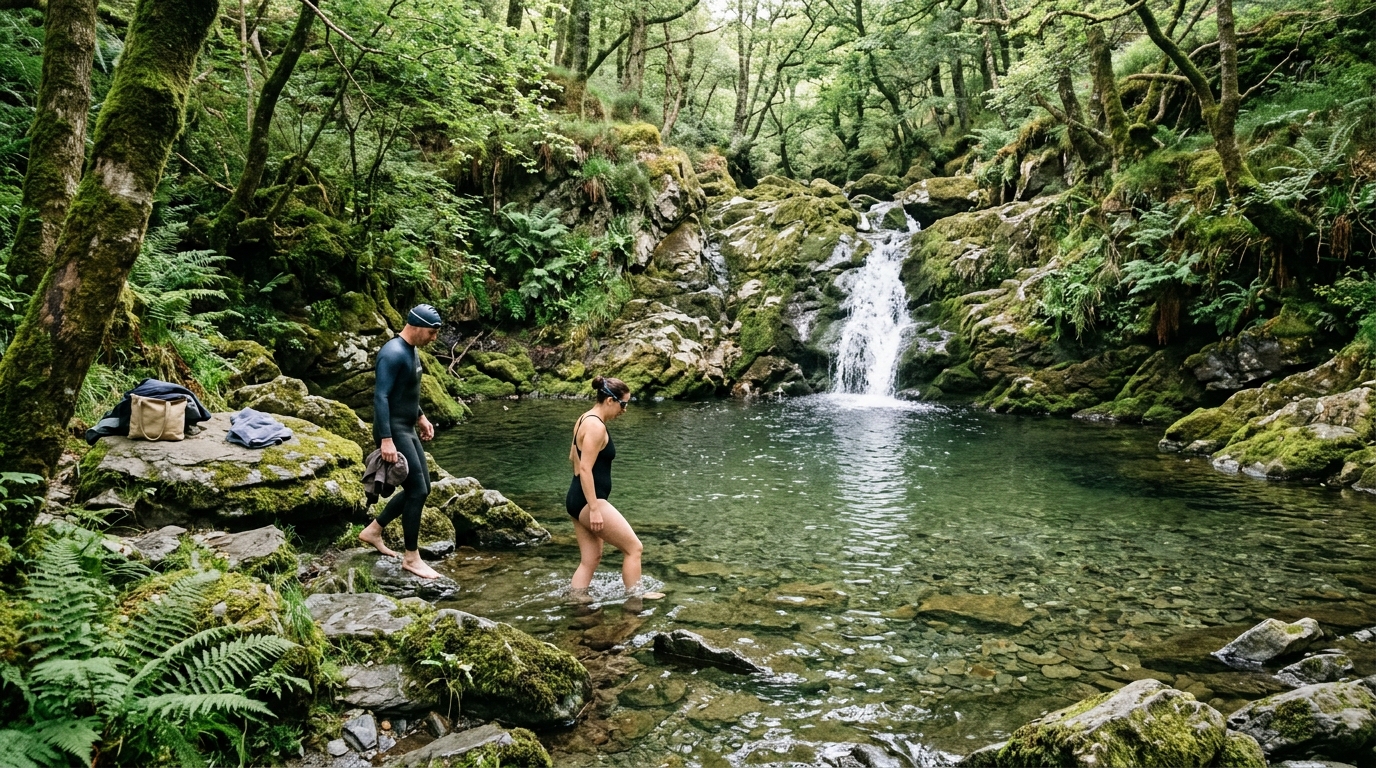
The current interest in wild swimming is easy to understand. The Isle of Man offers more than sea beaches: wooded glens, river pools and waterfalls create freshwater options that feel completely different from a coastal swim. Visit Isle of Man’s 2026 wild-swimming feature highlights Ballaglass Glen, Spooyt Vane, the Old Mine Pools, Glen Helen and the Blue Lagoon Salmon Pool.
These are not swimming pools with lifeguards and controlled depths. Natural water can be colder than expected, submerged hazards may be invisible, and rocks become slick after rain. The safest approach is to choose locations that match your experience rather than choosing the most dramatic-looking photo.
Five Wild Swimming Locations to Know
From Fairy Pools to Waterfall Dips
Ballaglass Glen’s Fairy Pool is tucked into a series of waterfalls in a wooded glen. The official tourism guide describes a crystal-clear pool with naturally sculpted rock features and a flat slab that can be used for sitting or picnicking. Access involves leaving the main path and carefully scrambling down near the pool, so footwear with reliable grip is important.
Spooyt Vane, whose Manx name means “White Spout,” offers another waterfall setting. The pool lies beneath the falls in woodland near Glen Mooar and is reached by a walk through the glen. It is particularly appealing for people who want the atmosphere of wild swimming without a coastal setting.
The Old Mine Pools sit higher in the landscape near the headwaters of the Sulby River. They are deeper and more remote, reached by walking from Sulby Glen Road toward the Millennium Way and then continuing upstream. Because remoteness changes the risk profile, this is a place where visitors should be conservative about weather, daylight and their own fitness.
Glen Helen Waterfall is more familiar to many walkers. A footpath through the glen leads toward the waterfall and the pools below it, making the outing easy to combine with a woodland walk. Even here, however, recent rain can affect flow, footing and water conditions.
The Blue Lagoon Salmon Pool in Cornaa Valley is another dramatic option. It is reached from Port Cornaa by following the riverside path. Some visitors jump from rocks, but that should never be treated as an endorsement. Water depth can vary, hidden obstacles can exist, and jumping into natural water adds unnecessary risk if conditions have not been properly assessed.
sea swimming
For sea swimming, check official water-quality information before entering the water. The Isle of Man Government publishes bathing-water profiles and sampling information for monitored locations. Its current guidance also reminds watercraft users to keep clear of designated Safe Bathing Areas, which matters for swimmers, paddleboarders and families sharing popular bays. You can check the official Isle of Man bathing water quality information before your visit.
A few simple habits make a major difference: check the tide and weather forecast, avoid swimming alone, know how you will exit the water before getting in, wear suitable footwear around rocks, and use a tow float or bright swim cap where appropriate. If conditions feel wrong, turn the swim into a walk or photography stop instead.
Late summer is an excellent time to connect these places into a wider island itinerary. A morning cove walk can lead into lunch in Peel or Ramsey, a waterfall visit can be followed by a glen walk, and a calm evening can finish with a coastal sunset. If you are visiting after the racing season, you may also want to read our guide to what to do after the Classic TT for more late-summer ideas.
The best hidden places on the Isle of Man are memorable precisely because they still feel natural. Go prepared, respect access, take your litter home and avoid disturbing wildlife or other visitors. Explore with patience rather than trying to collect every location in a single day, and you will experience a side of the island that many visitors never see.
For more inspiration, browse Places, check What’s On for activities during your stay, or use the Directory to find cafés, food and local services close to your route.